The ceremony, part by part
Whirling dervish sema explained
What happens in a Mevlevi sema, part by part: the music, the cloaks and hats, the four selams, and what is ceremony and what is performance.
Reserve the dervish evening ↗Quick answer
A sema is the Mevlevi Sufi ceremony in which dancers called semazens turn to music. It follows a set order: a eulogy and a reed-flute improvisation, a slow procession of three circuits, four sections called selams in which the dancers whirl, and a closing recitation. The Mevlevi order began in Konya after Rumi's death in 1273, and UNESCO lists the ceremony as intangible cultural heritage.
What a sema is
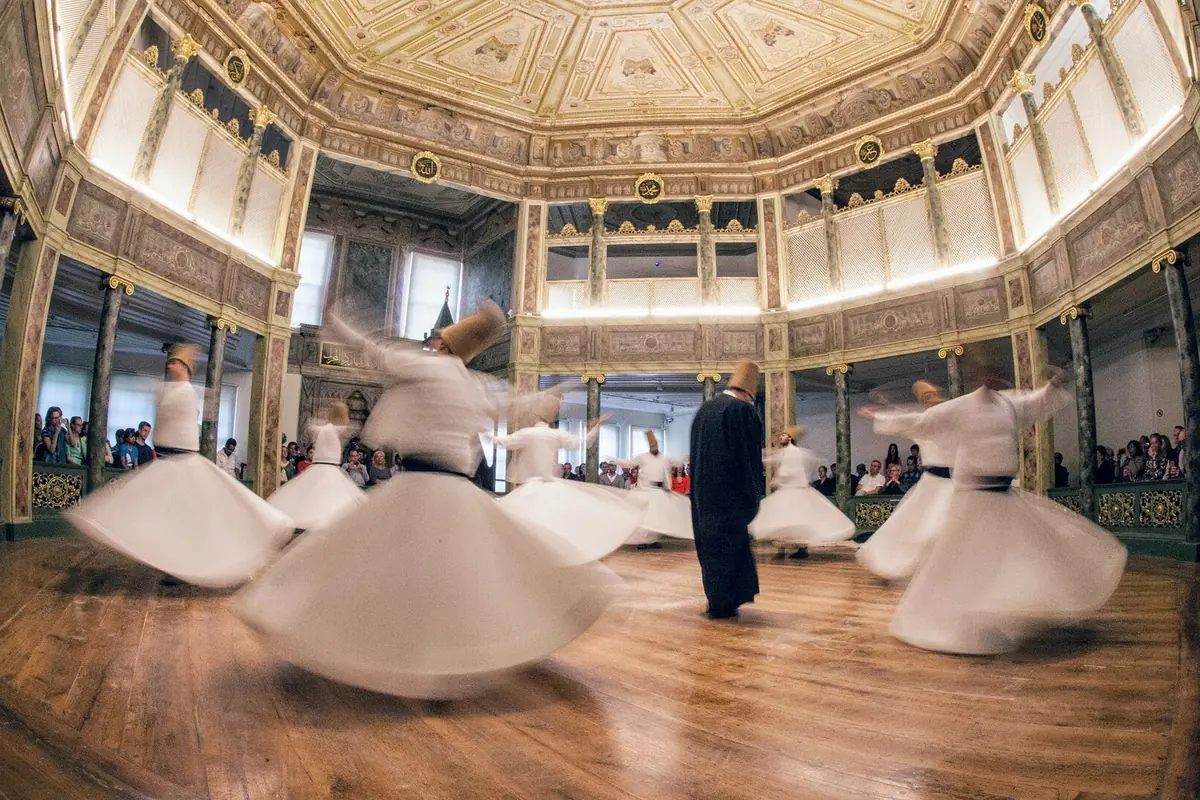
Sema comes from a word for listening. In the Mevlevi order it is a ritual of remembrance of God, performed in a hall called a semahane, with the dancers, the semazens, turning in a circle around their sheikh. It is prayer expressed through music and movement. UNESCO names Konya and Istanbul as the most active centres of the order today. The ceremony follows a prescribed order, and once you know it, the evening stops looking like a spectacle and starts reading as a sequence. Many visitors expect a show and find a ritual, and that gap is worth closing before you go. The rest of this guide takes the ceremony in the order it unfolds.
The music
The musical repertoire of the sema is called the ayin. UNESCO describes it as a set of four sections, sung and played by a small ensemble: a singer, a neyzen (the ney player) and two percussionists on kettledrum and cymbals. The ney is an end-blown reed flute, and the Turkish version normally has seven holes, six on the front and a thumb hole behind. The ney leads the music. The music is composed for the ritual, and several Ottoman composers wrote ayins for the Mevlevi lodges, so what you hear belongs to the ceremony rather than decorating it. Listen for the way the instruments hand over to one another, since each selam has its own music and the shifts mark where you are in the ceremony.
Part one: the eulogy and the reed flute
The ceremony opens with the Naat-i Şerif, a eulogy to the Prophet Muhammad sung by a solo voice. It ends with a taksim, an improvisation on the ney, which the order reads as the divine breath that gives life to everything. Other accounts add prayers, Quran recitation and readings from Rumi's Masnavi at the start, so the exact order differs a little between sources and between lodges. What stays constant is the mood: voice and flute first, no movement yet, and the semazens waiting in their black cloaks. If you arrive in the hall while this part is under way, you are in the right place.
Part two: the procession
Next comes the Devr-i Veled, named for Rumi's son Sultan Veled. The semazens walk slowly around the hall to instrumental music. Before each circuit they bow to the dancer in front and then the one behind, a greeting described as soul to soul. They make three circuits in all. Before the circuits begin there is a forceful slap on the ground, which the order links to the divine command at creation. Then, after the circuits, they remove their black cloaks. Watch for this moment, because it separates the opening from the turning. Everything up to this point is walking. The turning starts only once the cloaks are off, so if you are at the back of a hall and cannot see the floor, use the music as your guide.
What the clothes mean
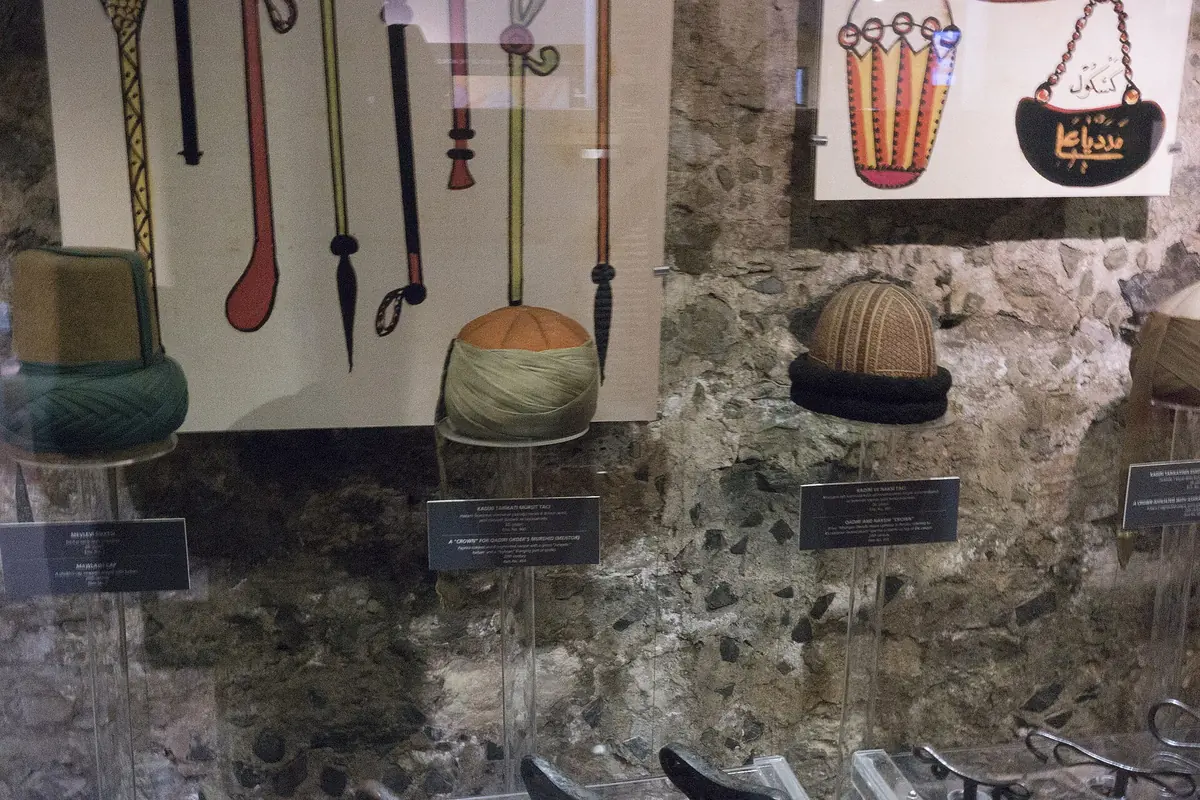
The semazens enter in black cloaks and tall brown felt hats. Accounts of the order read the cloak as the grave and the hat, the sikke, as the tombstone of the ego, so taking off the cloak means rebirth. The long white skirts and jackets underneath are the other symbols the ceremony shows, though sources explain the white robe in slightly different ways, and I give only the cloak and the hat as settled. The hats are worth looking at closely if you see them displayed in a lodge museum.
Part three: the four selams
The selams form the main part of the ceremony. The dancers whirl with the right foot driving them round the left, which stays rooted as an axis. Their arms are lifted, the right palm facing up to receive grace and the left facing down toward the earth. Each selam is a separate musical movement. One widely quoted account reads the first as the birth to truth through knowledge, the second as rapture at the order of creation, the third as that rapture turning into love, and the fourth as a return to service of all creation. In the last, the sheikh joins the turning. Each selam is a distinct musical movement, so let the music mark where you are rather than counting.
The close
The ceremony ends with a recitation from the Quran. A verse often used is 2:115, which says that wherever you turn, there is the face of God. Prayers and a shared invocation close the ritual, and Audiences are expected to stay silent and still through the ceremony, and the quiet after the turning is part of it. If you are at a dinner evening, expect this closing section to be handled by the host's timetable: the introduction before and the meal afterwards frame it. Not every venue follows every step of the full ritual. If something is shorter or reordered, that is a matter of format, not a mistake.
Ceremony or performance
The Mevlevi lodges were closed in Turkey in 1925, and UNESCO records that the state began to permit public performances again in the 1950s, and eased restrictions in the 1990s. During those years the tradition passed on mostly as music and song rather than spiritual teaching. UNESCO adds that many ceremonies are now staged for visitors in cut-down form, while some private groups work to restore the original intimate character. A dinner evening belongs to the visitor category. It is real music and real turning, in an order close to the ceremony, but it is not a full service, and the host should say so. None of this makes the evening worthless. It means you should go for the music, the turning and the explanation, and read it as an introduction to the tradition rather than a replacement for a service in a working lodge.
Istanbul and the sema
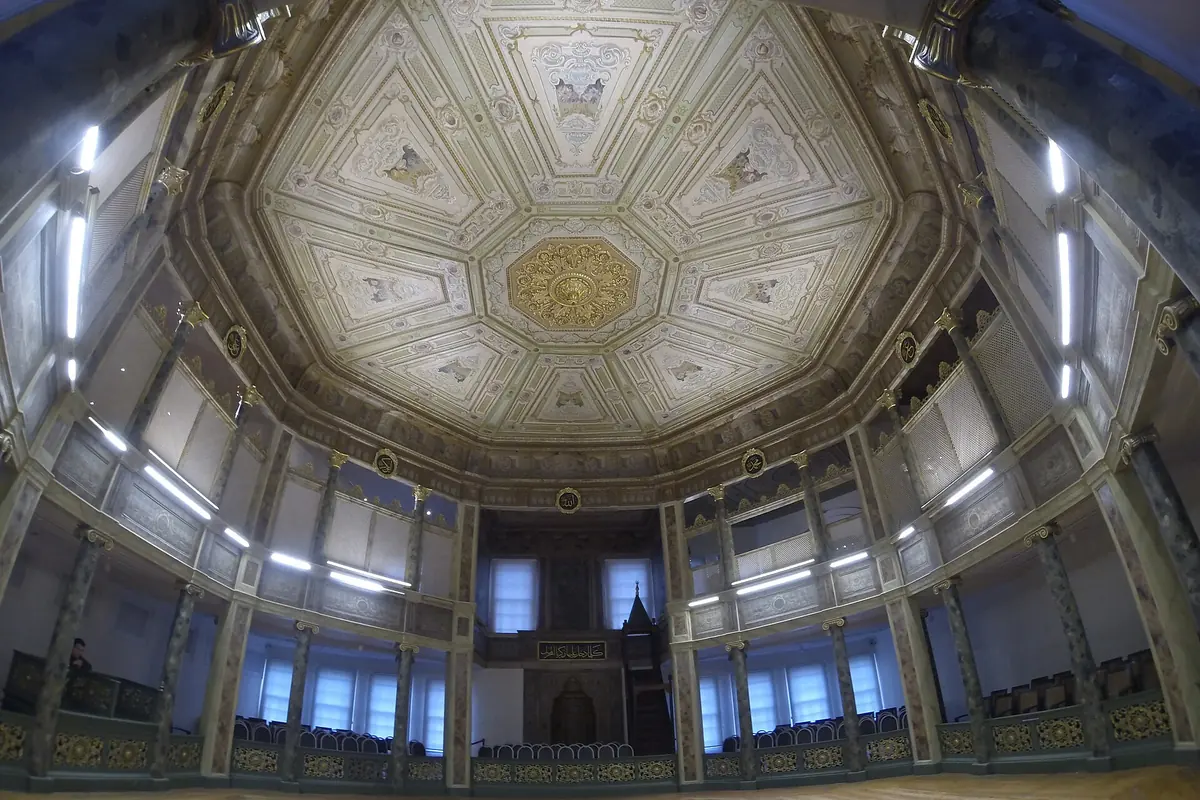
UNESCO names Istanbul, with Konya, as one of the most active centres of the Mevlevi tradition. The city's Galata Mevlevi Lodge, founded in 1491, is now a museum that also hosts whirling dervish performances, and it shows the semahane layout in an Ottoman building with an octagonal hall. Visitors in Istanbul can therefore see the ceremony in a lodge, in a performance hall or as part of an evening such as the dinner on this site. Each has a different feel, and the introduction you receive shapes how much you take in.
How to watch
UNESCO says the whirler keeps the eyes open but unfocused, so the surroundings blur and flow. Do the same. Rather than following one dancer, let your eyes rest on the circle and notice the arms, the skirts and the slow pace. Stay quiet and keep your phone away; a flash breaks the concentration of the dancers. Traditionally, UNESCO notes, the whirlers follow a recommended fast of several hours first, which is one reason a dinner afterwards fits the order of the evening so naturally. If you can, sit where you can see the whole circle, since the pattern of the group is part of the meaning.
Who this isn't for
If you want lights, a stage show or lively dance, a sema will disappoint you. It is slow, repetitive by design and silent for long stretches. It also asks the audience for respect for a religious ritual, and Muslims hold different views on music and dance in worship, so some people watch with mixed feelings. If you are restless in quiet settings, or bringing young children who will not stay quiet for an hour, a different evening may suit you better.
Frequently asked questions
What does sema mean?
Sema comes from a word meaning listening. In the Mevlevi order it names the whirling ceremony, a ritual of remembrance of God performed to music.
Why do the dervishes spin?
The turning is a form of prayer. The order reads it as a spiritual ascent through knowledge and love, with each full turn accompanied by remembrance of God.
How long is a full sema?
Sources do not give one fixed length. Visitor performances are often shortened, so check the length shown for your ticket rather than assuming.
Is a sema the same as belly dance or folk dance?
No. It is a Sufi ritual with a fixed order, set music and symbolic dress, performed in silence by the audience.
Can women whirl?
Historically the practice involved men, but sources describe women as early participants and some groups have mixed ceremonies today. Check the programme for your date.
Is the ceremony on a heritage list?
Yes. UNESCO proclaimed the Mevlevi Sema ceremony a Masterpiece of the Oral and Intangible Heritage of Humanity in 2005, and it now sits on UNESCO's intangible heritage list.
Sources